
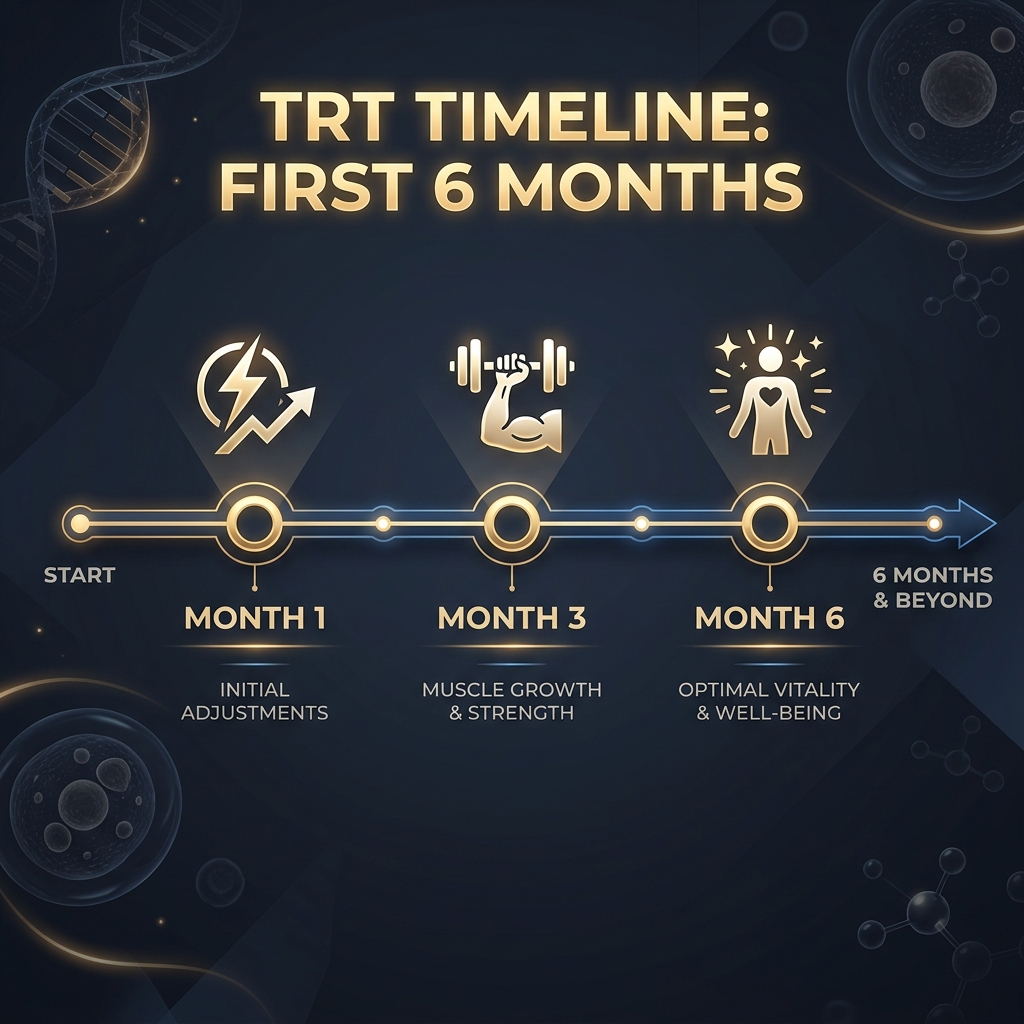
"How long does it take for TRT to work?" is the most common question new patients ask. The answer isn't simple because testosterone replacement therapy doesn't work like aspirin. Instead of an immediate effect, TRT initiates a cascade of physiological changes that unfold over months—and sometimes years.
Understanding this timeline is crucial. Men who expect drastic muscle growth in week two often get discouraged and quit right before the real benefits begin. If you are starting therapy through a specialized clinic like Telehealth FX, here is the evidence-based timeline of exactly what you will feel, and when you will feel it.
Weeks 1–3: The Neurological Shift
The first changes you experience on TRT are neurological and psychological, not physical. Testosterone receptors in the brain respond relatively quickly to returning serum levels.
- Libido and Morning Erections: Usually the very first sign of efficacy. Spontaneous morning erections often return within 2 to 3 weeks. Libido typically increases around the same time.
- Mental Clarity: The "brain fog" commonly associated with hypogonadism begins to lift. You may notice sharper focus and improved working memory.
- Sleep Architecture: Paradoxically, some men report slightly disrupted sleep in the first week as the body adjusts, followed by significantly deeper, more restorative sleep by week three.
Months 1–2: Mood and Energy Stabilization
As you enter your second month, your serum testosterone levels should be reaching a stable state (assuming your dose is dialed in). This phase is characterized by systemic mood improvements.
- Depressive Symptoms: Mild to moderate depressive symptoms associated with low testosterone often improve significantly by week 4–6. Confidence and assertiveness return to baseline.
- Sustained Energy: The mid-afternoon crash begins to disappear. Energy levels remain consistent throughout the day.
- Water Retention (Temporary): Some men experience mild water retention or "moon face" around week 4–6 as estrogen levels temporarily rise with testosterone. This usually subsides as your body reaches homeostasis.
The 6-Week Blood Work Check
At week 6, your clinician will order follow-up labs to check your total/free testosterone, estradiol, hematocrit, and PSA. This is when your dose is adjusted based on both your numbers and your symptom resolution. Telehealth FX includes all follow-up monitoring in its $79/mo plan.
Months 3–4: The Physical Recomposition Begins
While you may feel better in month one, it takes 12 to 16 weeks to see meaningful changes in the mirror. Body composition shifts take time to manifest.
- Fat Mass Reduction: Improved insulin sensitivity and metabolic rate lead to a gradual reduction in visceral fat mass.
- Lean Muscle Mass: Protein synthesis increases. If you are weight training, you will notice faster recovery, increased strength, and visible muscle hypertrophy starting around month 3.
- Erythropoiesis (Red Blood Cells): Your body increases red blood cell production. While this improves stamina, it's also why your clinician must monitor your hematocrit levels to prevent the blood from becoming too thick.
Month 6 and Beyond: Maximum Benefit
By month six, you have reached the "plateau of efficacy" for most physiological metrics. The benefits you have gained will stabilize and maintain as long as you continue therapy.
- Bone Mineral Density: Bone density changes take the longest to occur, with initial improvements detectable at 6 months, continuing to increase for up to 3 years.
- Lipid Profiles: Your cholesterol profiles (HDL and LDL) will have stabilized. (Note: Oral TRT methods can negatively impact lipids more than injectables or creams).
- Maximum Muscle Growth: The trajectory of lean mass gain will peak around month 6-12, assuming diet and training remain constant.
Why Your Timeline Might Vary
If you don't follow this exact timeline, don't panic. Several factors can influence how quickly TRT works for you:
- Starting Baseline: Men with extremely low initial levels (e.g., 150 ng/dL) often feel subjective benefits faster than men starting at borderline levels (e.g., 350 ng/dL).
- Delivery Method: Injections and creams spike serum levels quickly, leading to faster initial symptom relief compared to long-acting pellets.
- SHBG Levels: High Sex Hormone-Binding Globulin (SHBG) can bind to your new testosterone, limiting the amount of "free" testosterone available to your tissues. Your protocol may need adjustment if SHBG is high.
Start Your Timeline Today
Comprehensive evaluation, personalized dosing, and medication delivery from $79/month.
See If You QualifyReferences
- Saad, F., et al. (2011). Onset of effects of testosterone treatment and time span until maximum effects are achieved. European Journal of Endocrinology. eje.bioscientifica.com
- Khera, M. (2016). Testosterone Therapies. Urologic Clinics of North America. pubmed.ncbi.nlm.nih.gov